

```html
Ever felt like you're paying a little extra when you trade currencies? Like there's a tiny toll booth on the road to profit? You're not imagining things. That's the spread, and understanding it is crucial to your success in the forex market.
Imagine setting up your trading platform, eager to jump into the world of forex. You see prices fluctuating, news alerts popping up, and the potential for profit shimmering on the horizon. But then you realize that the "buy" price is always a little higher than the "sell" price. This difference can feel like a hidden cost, a small hurdle you need to overcome just to break even. And when you're trading frequently, these small hurdles can quickly add up, eating into your potential earnings.
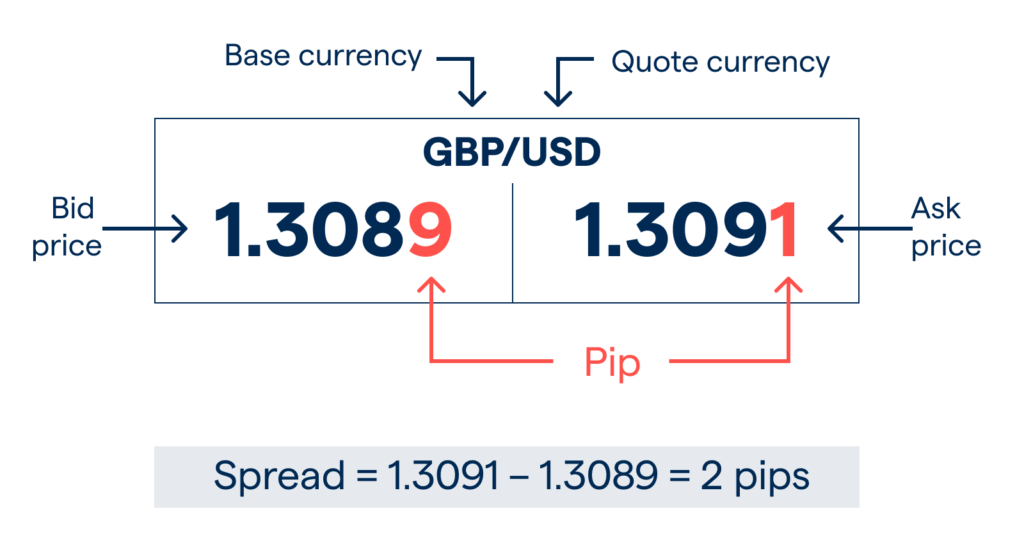
The spread in forex is simply the difference between the bid price (the price at which a broker is willing to buy a currency from you) and the ask price (the price at which a broker is willing to sell a currency to you). It's essentially the transaction cost for trading a currency pair. This is how brokers make their money, acting as intermediaries in the market. Think of it as the retailer's markup on a product – they buy it for less than they sell it for, and the difference is their profit.
In essence, the spread in forex represents the cost of entry into a trade. It's a vital component to consider when calculating potential profits and losses. Understanding factors influencing the spread, like market volatility and currency pair liquidity, is key to making informed trading decisions. Remember, the lower the spread, the more cost-effective your trading becomes. We'll delve deeper into these aspects below.
Understanding Bid and Ask Prices
I remember when I first started trading, I was so focused on predicting market movements that I completely overlooked the significance of the bid and ask prices. I'd get excited about a potential trade, only to realize that the spread had already eaten into my potential profits. It was a frustrating experience, and it taught me a valuable lesson: understanding bid and ask prices is as crucial as understanding market trends.
The bid price represents the highest price that a buyer (typically your broker) is willing to pay for a currency pair. Think of it as the "sell" price if you're looking to exit a position. The ask price, on the other hand, is the lowest price that a seller (again, your broker) is willing to accept for a currency pair. This is the "buy" price if you're looking to enter a position. The spread is the gap between these two prices, representing the broker's compensation for facilitating the trade. A narrower spread benefits the trader, while a wider spread favors the broker. Factors such as market volatility, liquidity, and the broker's pricing model can influence the spread size.
For instance, during periods of high market volatility, such as after a major economic announcement, spreads tend to widen as brokers try to compensate for the increased risk. Similarly, less liquid currency pairs, like exotic currencies, often have wider spreads than major currency pairs like EUR/USD. Furthermore, different brokers may offer different spreads based on their business models and the relationships they have with liquidity providers. Some brokers offer fixed spreads, while others offer variable spreads that fluctuate with market conditions. Understanding these dynamics is essential for effectively managing your trading costs and maximizing your profits. Always compare the bid and ask prices across different brokers before making a trade.
Fixed vs. Variable Spreads
The world of forex is full of choices, and spreads are no exception. You'll encounter brokers offering fixed spreads, while others boast about their variable spreads. Which one is right for you? Well, like many things in trading, it depends on your strategy and risk tolerance.
Fixed spreads, as the name suggests, remain constant regardless of market volatility. This can be appealing because it provides predictability. You know exactly how much the spread will cost you on each trade, which can be helpful for planning and managing your risk. However, fixed spreads tend to be wider than the minimum spreads offered by brokers with variable spreads. This means you might be paying a premium for that predictability, especially during periods of low volatility.
Variable spreads, on the other hand, fluctuate with market conditions. During periods of high liquidity and low volatility, variable spreads can be very tight, potentially saving you money on each trade. However, during periods of high volatility, variable spreads can widen significantly, potentially increasing your trading costs and even triggering stop-loss orders unexpectedly. Variable spreads are often offered by brokers who use Electronic Communication Networks (ECNs) or Straight Through Processing (STP), which directly connect traders to the interbank market. This can result in more competitive pricing, but it also means you're exposed to the full volatility of the market. Choosing between fixed and variable spreads requires careful consideration of your trading style and risk tolerance. If you prefer predictability and are willing to pay a premium for it, fixed spreads might be a good option. If you're comfortable with market volatility and want the potential for tighter spreads, variable spreads might be a better fit.
The History and Myth of the Spread
The concept of the spread isn't some modern invention of the internet age. It's been around as long as markets have existed, a fundamental part of how intermediaries make a profit. Understanding its origins can help dispel some of the myths surrounding it.
Historically, the spread was much wider than it is today. Before the advent of electronic trading and the proliferation of forex brokers, accessing the interbank market was limited to large institutions. This meant that retail traders had to rely on a smaller number of brokers, who could charge significantly higher spreads. The rise of online trading platforms and increased competition among brokers has driven spreads down considerably, making forex trading more accessible to the average person.
One common myth is that brokers are always trying to "rip off" traders by widening spreads. While it's true that some unscrupulous brokers may engage in unethical practices, the vast majority of brokers are simply trying to make a fair profit for providing their services. Widening spreads during periods of high volatility is often necessary to compensate for the increased risk and ensure the stability of the broker's platform. Another myth is that spreads are the only cost associated with forex trading. In reality, many brokers also charge commissions or other fees, which can add to the overall cost of trading. It's important to carefully compare the fees and spreads offered by different brokers before choosing one. Always read the fine print and understand the terms and conditions of your trading account. By understanding the history and dispelling the myths surrounding the spread, you can make more informed decisions about your trading and avoid being taken advantage of.
The Hidden Secret of Forex Spreads
While the spread seems like a simple concept, it hides a crucial secret: its impact on your overall profitability. Many novice traders focus solely on identifying profitable trades, overlooking the silent killer of profits: the spread.
The "hidden secret" is that the spread is essentially your initial loss on every trade. Before you can start making a profit, the market needs to move in your favor by at least the amount of the spread. This means that even if you correctly predict the direction of the market, you can still lose money if the movement isn't large enough to cover the spread. This is particularly true for scalpers, who aim to profit from small price movements. For them, the spread can represent a significant portion of their potential profit, making it essential to find brokers with tight spreads.
Furthermore, the spread can have a psychological impact on traders. Knowing that you're starting each trade in a deficit can lead to impatience and impulsive decisions. You might be tempted to close a trade prematurely in an attempt to avoid further losses, even if the market is likely to move in your favor eventually. This can lead to missed opportunities and ultimately reduce your profitability. The best way to overcome this "hidden secret" is to factor the spread into your trading strategy. Choose currency pairs with tight spreads, and be realistic about your profit expectations. Don't be afraid to hold onto a trade for longer if you believe it has the potential to become profitable, even if it means enduring a temporary loss due to the spread. Remember, patience and discipline are key to success in forex trading.
Recommendations Regarding Forex Spreads
So, how do you navigate the world of forex spreads and ensure you're getting the best possible deal? Here are a few recommendations to keep in mind.
First, always compare spreads across different brokers. Don't just settle for the first broker you find. Take the time to research different options and compare their spreads for the currency pairs you're interested in trading. Remember, even a small difference in spread can add up significantly over time. You can find useful comparison tools online or directly check the live spreads on each broker's trading platform. Second, consider your trading style. If you're a scalper, tight spreads are essential. Look for brokers who offer ECN or STP accounts, which typically have the lowest spreads. If you're a swing trader or position trader, the spread is less critical, but it's still important to be mindful of it. Third, be aware of spread widening during periods of high volatility. Avoid trading during major economic announcements or other events that are likely to cause significant market fluctuations. These are the times when spreads are likely to widen the most, potentially wiping out your profits. Fourth, read the fine print. Some brokers advertise low spreads but then charge hidden fees or commissions. Be sure to understand all the costs associated with trading with a particular broker before opening an account. Finally, remember that the spread is just one factor to consider when choosing a forex broker. You should also look at other factors such as regulation, platform stability, customer support, and the range of instruments offered. If you are looking for a reliable broker, consider checking out XM Broker. They are known for their competitive spreads and range of services.
Understanding Pip Value and Spread
To truly understand the impact of the spread, you need to understand pip value. A "pip" (percentage in point) is the smallest unit of price movement in a currency pair. For most currency pairs, a pip is equal to 0.0001 (e.g.,
1.2345 to
1.2346 is a one pip movement). For currency pairs involving the Japanese Yen (JPY), a pip is typically
0.01 (e.g.,
110.00 to
110.01 is a one pip movement).
Pip value is the monetary value of one pip movement. It depends on the currency pair being traded, the lot size (the amount of currency you're trading), and your account currency. You can calculate pip value using online tools or by using the following formula: (Pip Size / Exchange Rate) x Lot Size = Pip Value. For example, if you're trading EUR/USD with a standard lot (100,000 units) and the exchange rate is 1.1000, the pip value would be: (0.0001 /
1.1000) x 100,000 = $9.09 per pip. The spread is measured in pips. So, if the spread for EUR/USD is
1.5 pips, it means you're paying
1.5 pips to enter the trade. To break even, the market needs to move in your favor by at least
1.5 pips. Understanding pip value is crucial for calculating your potential profits and losses and for determining whether the spread is acceptable for a particular trade. If the pip value is high and the spread is low, the spread has a relatively small impact on your profitability. However, if the pip value is low and the spread is high, the spread can significantly reduce your profits. This is especially true for scalpers, who often aim to profit from small price movements. They need to be very careful about the spread they're paying to make sure their trades are still profitable. By understanding pip value and how it relates to the spread, you can make more informed trading decisions and maximize your profits.
Tips on Minimizing the Impact of the Spread
While you can't eliminate the spread entirely, there are several strategies you can use to minimize its impact on your trading results.
First, choose currency pairs with tight spreads. Major currency pairs like EUR/USD, USD/JPY, and GBP/USD typically have the lowest spreads due to their high liquidity. Avoid trading exotic currency pairs, which often have wider spreads. Second, trade during peak market hours. Liquidity is highest during the overlap between the London and New York trading sessions, which typically results in tighter spreads. Avoid trading during off-peak hours, when liquidity is lower and spreads are wider. Third, use limit orders instead of market orders. A limit order allows you to specify the price at which you're willing to buy or sell a currency pair. This can help you avoid slippage, which is the difference between the price you requested and the price you actually paid (or received). Fourth, choose a broker with competitive spreads. Do your research and compare the spreads offered by different brokers. Look for brokers who offer ECN or STP accounts, which typically have the lowest spreads. Fifth, consider using a rebate program. Some brokers offer rebates on your trading volume, which can help offset the cost of the spread. Finally, factor the spread into your trading strategy. When calculating your potential profits and losses, be sure to account for the spread. This will help you make more realistic decisions about whether a particular trade is worth taking. By following these tips, you can minimize the impact of the spread on your trading results and improve your overall profitability. Remember, every pip counts!
The Role of Liquidity Providers in Spread Formation
Liquidity providers are essential players in the forex market, and they directly influence the spreads you see on your trading platform. These providers are typically large banks, hedge funds, and other financial institutions that are willing to buy and sell large volumes of currency.
They provide liquidity to the market by constantly quoting bid and ask prices for various currency pairs. The more liquidity providers there are in the market, the more competitive the pricing becomes, which leads to tighter spreads. When there are many buyers and sellers for a particular currency pair, liquidity is high, and the spread tends to be narrow. Conversely, when there are few buyers and sellers, liquidity is low, and the spread tends to be wide. Brokers rely on liquidity providers to fill their clients' orders. When you place a trade, your broker sends it to their liquidity providers, who then execute the trade at the best available price. The spread you see on your platform is essentially the difference between the bid and ask prices offered by these liquidity providers. Brokers can choose to aggregate liquidity from multiple providers to offer their clients the best possible pricing. This is known as an ECN (Electronic Communication Network) or STP (Straight Through Processing) model. Brokers who use this model typically offer variable spreads that fluctuate with market conditions. Other brokers may choose to act as market makers, which means they take the opposite side of their clients' trades. These brokers typically offer fixed spreads, which can be more predictable but may also be wider than variable spreads. Understanding the role of liquidity providers is crucial for understanding how spreads are formed and how they can fluctuate. By choosing a broker who has access to a wide range of liquidity providers, you can increase your chances of getting the best possible pricing on your trades.
Fun Facts About Forex Spreads
Did you know that the spread can actually predict market volatility? Or that some currency pairs have historically traded withnegativespreads?
Here's a fun fact: the VIX index, often called the "fear gauge," is directly correlated with spread widening. When the VIX rises, indicating increased market uncertainty, spreads tend to widen as liquidity providers become more cautious. Another interesting tidbit: during extreme market events, like the Swiss Franc crisis in 2015, some brokers temporarily offered negative spreads on certain currency pairs. This meant that traders were actually paid to enter a trade! This was a highly unusual situation caused by extreme order imbalances and liquidity shortages. Speaking of unusual, the spread on exotic currency pairs can be incredibly wide, sometimes exceeding 100 pips. This is due to the low liquidity and high volatility associated with these pairs. Finally, did you know that the spread is constantly changing, even during periods of low volatility? Brokers are constantly adjusting their pricing based on the latest market data and order flow. This means that the spread you see on your platform is just a snapshot in time and can change in a matter of seconds. So, the next time you're trading forex, take a moment to appreciate the fascinating dynamics behind the spread. It's a small but crucial element of the market that can have a big impact on your trading results. Understanding these fun facts can make you a more informed and savvy trader.
How to Calculate the Cost of the Spread
Calculating the cost of the spread is essential for managing your trading expenses and determining the profitability of your trades. Fortunately, it's a relatively simple calculation.
The formula for calculating the cost of the spread is: Spread in Pips x Pip Value x Lot Size = Spread Cost in Account Currency. Let's break this down with an example: Suppose you're trading EUR/USD with a spread of 1.5 pips, a pip value of $10, and a standard lot size of 100,000 units. The spread cost would be:
1.5 pips x $10/pip x 1 lot = $15. This means that you're paying $15 to enter the trade. To break even, the market needs to move in your favor by at least $15. It's important to note that the pip value will vary depending on the currency pair, the lot size, and your account currency. You can use online pip value calculators to quickly determine the pip value for a particular trade. Once you know the spread cost, you can factor it into your trading strategy and determine whether a particular trade is worth taking. For example, if you're aiming for a profit of $50 on a trade, but the spread cost is $15, your net profit would only be $35. In this case, you might want to consider increasing your target profit or finding a currency pair with a tighter spread. By calculating the cost of the spread, you can make more informed trading decisions and maximize your profitability. Remember, every dollar counts!
What If the Spread Widens Unexpectedly?
Unexpected spread widening can be a trader's worst nightmare, especially during periods of high volatility. Understanding what to do in such situations can help you minimize your losses and protect your capital.
The first thing to do is to remain calm and avoid making impulsive decisions. Panicking and closing your positions prematurely can often lead to even greater losses. Instead, take a deep breath and assess the situation rationally. Try to determine the reason for the spread widening. Is it due to a major economic announcement, a geopolitical event, or simply a temporary liquidity shortage? If the spread widening is due to a temporary event, it may be best to simply wait it out. The spread will likely narrow again once the market calms down. However, if the spread widening is due to a more significant event, you may need to take action. One option is to adjust your stop-loss orders to account for the wider spread. This will help prevent your positions from being closed prematurely due to the increased volatility. Another option is to reduce your position size. This will limit your potential losses if the market moves against you. If you're using leverage, be especially careful. Spread widening can magnify your losses, potentially leading to a margin call. In extreme cases, you may need to close your positions to avoid further losses. Ultimately, the best course of action will depend on your individual circumstances and your risk tolerance. However, by remaining calm, assessing the situation rationally, and taking appropriate action, you can minimize the impact of unexpected spread widening and protect your capital. Always have a plan in place for dealing with unexpected market events.
Listicle: 5 Ways to Reduce Forex Trading Costs
Forex trading costs can eat into your profits. Here are 5 ways to keep them in check.
1.Choose a Broker with Competitive Spreads: This seems obvious, but it's worth repeating. Compare spreads across different brokers and choose one that offers the lowest spreads for the currency pairs you trade.
2.Trade During Peak Market Hours: Liquidity is highest during the overlap between the London and New York trading sessions. This typically results in tighter spreads. Avoid trading during off-peak hours.
3.Use Limit Orders: Limit orders allow you to specify the price at which you're willing to buy or sell. This can help you avoid slippage and get better pricing.
4.Consider Commission-Based Accounts: Some brokers offer commission-based accounts with very tight spreads. While you'll pay a commission on each trade, the overall cost may be lower than accounts with wider spreads and no commissions.
5.Negotiate with Your Broker: If you're a high-volume trader, you may be able to negotiate lower spreads or commissions with your broker. It's worth asking! Remember, every pip saved is a pip earned. By implementing these strategies, you can significantly reduce your forex trading costs and improve your overall profitability.
Question and Answer About What Is a Spread in Forex?
Let's tackle some common questions about spreads in forex.
Q: Why do spreads widen during news events?
A:Increased volatility and uncertainty during news events lead to lower liquidity and higher risk for brokers, causing them to widen spreads to compensate.Q: What is the difference between a dealing desk and a non-dealing desk broker?
A: Dealing desk brokers act as market makers and may offer fixed spreads, while non-dealing desk brokers connect you directly to liquidity providers and offer variable spreads.Q: How can I find out the average spread for a currency pair?
A: Many brokers display historical spread data on their websites or trading platforms. You can also use third-party tools to track spreads.Q: Is a lower spread always better?
A: Not necessarily. While a lower spread is generally desirable, you should also consider other factors like regulation, platform stability, and customer support.
Conclusion of What Is a Spread in Forex?
Understanding the spread is fundamental to becoming a successful forex trader. It's more than just a number; it's a reflection of market dynamics, broker practices, and the cost of doing business in the forex world. By mastering the concepts discussed in this post, you'll be well-equipped to navigate the complexities of the forex market and make informed trading decisions. And remember, always choose a reputable broker like FBS that offers competitive spreads and a reliable trading platform.
```


0 Reviews
Your rating